

Scroll down for live updates and the latest politics news.
Key Events

‘Still too high’: What Chalmers is blaming inflation pressure on
Treasurer Jim Chalmers has blamed the war in the Middle East, and rising oil prices, for ongoing spikes to inflation - which reached a seven month high on Wednesday.
The Treasurer argued the “single biggest driver of higher headline inflation was higher fuel prices”, in a statement following the Australian Bureau of Statistic’s announcement.
“We already had an inflation challenge in our economy and the war in the Middle East is making it worse,” he said.
“We’ve seen higher oil prices driving higher inflation around the world and today’s figures confirm we are not immune from that.
“From an economic point of view, the conflict can’t end soon enough.
“The numbers in today’s data are still too high.”
The Treasurer also argued inflation had “increased in every major advanced economy in September and the markets are expecting rate rises in all of them”.
Australia’s headline inflation rate was higher than other advanced economies in September, including the US (3.7 per cent), UK (3.6 per cent), Canada (3.1 per cent) and New Zealand (3.7 per cent).

He said Australia’s inflation challenge wasn’t unique.
“The numbers in today’s data are still too high,” he said. “Inflation has increased in every major advanced economy in September and that’s why the markets are expecting rate rises in all of them.

Taylor throws mud at Albo over $6m golf club bungle
Opposition leader Angus Taylor has criticised Anthony Albanese’s handling of scrutiny over a $6 million dollar grant for a golf course in his seat.
The Prime Minister and his Labor colleagues have been forced to admit that Mr Albanese’s claims that the grant included sewage work at Marrickville Golf Club were false, as it was “not in the scope of the grant”.
In a 2SM radio interview on Wednesday, Mr Taylor said the admission only came after the Prime Minister was pressured “on multiple occasions”.
“This guy cannot admit that he got it wrong and it gives you a huge insight into this Prime Minister and his character,” Mr Taylor said.
“His strategy is (to) dig in, refuse to admit any wrongdoing, arrogantly attack your opponents, which he did, and refuse to respond to people seeking answers to legitimate questions.
“This is the problem with our country right now, with this Government.”
Mr Albanese claims it was an honest mistake caused by the fact the NSW government had subsequently stepped in with their own grant for the sewerage issue.
“The funding was going to be for sewerage, the NSW government have stepped in which is appropriate given that NSW runs water and sewerage,” Mr Albanese said during Question Time on Tuesday.
‘Still too high’: What Chalmers is blaming inflation pressure on
Treasurer Jim Chalmers has blamed the war in the Middle East, and rising oil prices, for ongoing spikes to inflation - which reached a seven month high on Wednesday.
The Treasurer argued the “single biggest driver of higher headline inflation was higher fuel prices”, in a statement following the Australian Bureau of Statistic’s announcement.
“We already had an inflation challenge in our economy and the war in the Middle East is making it worse,” he said.
“We’ve seen higher oil prices driving higher inflation around the world and today’s figures confirm we are not immune from that.
“From an economic point of view, the conflict can’t end soon enough.
“The numbers in today’s data are still too high.”
The Treasurer also argued inflation had “increased in every major advanced economy in September and the markets are expecting rate rises in all of them”.
Australia’s headline inflation rate was higher than other advanced economies in September, including the US (3.7 per cent), UK (3.6 per cent), Canada (3.1 per cent) and New Zealand (3.7 per cent).
He said Australia’s inflation challenge wasn’t unique.
“The numbers in today’s data are still too high,” he said. “Inflation has increased in every major advanced economy in September and that’s why the markets are expecting rate rises in all of them.
New threat to inflation ‘materialised’: RBA boss
RBA boss Michele Bullock told Sentate estimates the central bank now expects heightened inflation to go for longer than what the board thought in August.
She said it was “not just … global pressures that are driving inflation in Australia” and that there were still “domestic capacity pressures”, while also confirming that new risks to inflation “have materialised or are materialising” since the rate-setting board’s August meeting.
“Our most recent published forecasts in the August statement on monetary policy suggest that inflation would not return to around the midpoint of the target range until late 2027,” she told Senate estimates.

Asked by Liberal deputy Jane Hume whether high government spending was contributing to high inflation, Ms Bullock said: “I’ve said this a number of times - part of the inflation problem is that demand is greater than the ability of the economy to supply.
“Demand is made up of demand from government and the private sector so I’ve said this a number of times, yes, to the extent that it is contributing to aggregate demand and aggregate demand is above supply, then it’s contributing to that.”
‘Inflation to remain high’: RBA governor
Reserve Bank governor Michele Bullock had conceded inflation was likely to remain high amid pressure from the Middle East conflict and domestic supply constraints.
Ms Bullock gave the dire warning to Senate Estimates on Wednesday, shortly before the Australian Bureau of Statistics revealed inflation soared to 4.3 per cent in September.
The latest result marks the highest level since March - during the early weeks of the Iran war - as automotive fuel prices surged by 23.6 per cent. It also represents the 14th consecutive month above the RBA’s 2-3 per cent target.
“The increase in inflation reflects both consistent capacity pressures in the Australian economy and global cost pressures associated with the conflict in the Middle East,” Ms Bullock told a Senate estimates.
“Because of both these factors, inflation is likely to remain elevated for some time.”

Calls continue for Iranian embassy to be completely shut down
Liberal Senator James Paterson has reiterated the Coalition’s support for the Iranian ambassador’s expulsion but repeated calls for the Iranian embassy to be completely shut down in Canberra.
The embassy was closed after Ambassador Ahmad Sadeghi was told to leave the country in August following a string of anti-Semitic attacks linked to the IRGC, however, some staff remain and continue to operate.
DFAT’s Middle East and Africa Division first assistant secretary Ralph King said that the remaining staff were a conduit for Australia to express their grievances to Tehran.
“Yes, the embassy has currently suspended operations,” Dr King confirmed in Senate Estimates on Wednesday.
“The view is that we have retained a formal channel to make clear… our concerns about Iranian actions and to pursue our national interests and the embassy in Canberra serves as a conduit for that purpose.
“We do regularly communicate them, including our views on Iran’s destabilising actions and our complete rejection of their interference in our affairs.”
Breaking: Inflation hits 4.3 per cent
Inflation has surged to 4.3 per cent in the year to September, according to data released Wednesday morning by the Australian Bureau of Statistics.
That was up from 4 per cent in the previous month, with the ABS numbers showing fuel and building material costs hardest hit. Economists had expected headline inflation to lift as high as 4.2 per cent.
It comes ahead of the Reserve Bank’s November meeting next week.
Another suspected Iranian hack victim comes forward
Liberal Senator James Paterson has revealed in Senate Estimates he’s been contacted by another suspected victim of an Iranian intelligence operations which targeted journalist Sharri Markson.
The News24 reporter and Liberal Party figure Michael Kroger have been targeted in when ASIO boss MIke Burgess has labelled a “sophisticated and targeted” intelligence operation.
Through the hacking incident IRGC accessed Ms Markson’s emails, while the attempt to access Mr Kroger’s data was not successful.
“A third Australian contacted me overnight after having seen the reporting and recognised the pattern behaviour and they believe they, too, have been a victim of this attack,” Senator Paterson said.
“They are now — I won’t reveal their identity, it’s not appropriate — but they are now dealing with our agencies to assess whether or not that’s correct or not.
“And that has to be, you know, assessed by our agencies.”
Foreign Minister Penny Wong said the Australia government doesn’t tolerate “the harassment or intimidation and surveillance of Australians”.
eSafety Commissioner likens social media to ‘gladiatorial arena’
eSafety Commissioner Julie Inman Grant says Australia needs a broader, better-equipped response to online abuse — including a private right of action for those harmed online.
Ms Inman-Grant expressed concerns that the current tool kit for eSafety wasn’t adaptable for emerging harms in her last Senate Estimates hearing in the online regulator role she’s held for a decade.
“In this highly charged environment, our complaint schemes are not designed to operate at the velocity and scale at which abuse is hurled or to tackle the opaque algorithms amplifying it,” she said on Tuesday.
“And that is why I believe eSafety needs a range of interventions — a digital duty of care but also stronger tools and protections for individuals, including a private right of action and legislation tailored to increasingly violent and threatening online hate.
“Social media is no longer the once envisioned, digital town square, it has become more like a gladiatorial arena.”
Read the full story here.
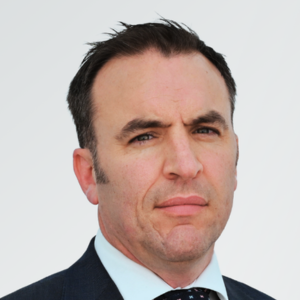
One Nation pushes ‘super pay boost’ in Parliament
A One Nation policy to allow Australians paying rent or a mortgage to receive 3 per cent of their wages from future compulsory super contributions will be put to Parliament on Wednesday.
The party’s Treasury spokesman Barnaby Joyce will move the amendment in the House of Representatives saying One Nation’s proposal would not touch existing super.
“For a full-time worker earning about $90,500, the Super Bay Boost would provide around $2,300 a year after the normal super tax, about $44 a week,” he said.
“For a working couple earning $168,000 between them, it would provide about $4,300 a year, or $82 a week, back in the family budget”.
Treasury chief admits government spending adding to demand
Treasury secretary Jenny Wilkinson has admitted government spending adds to demand in the economy during a time of high inflation.
The admission was made after 13 minutes of questioning from Liberal deputy leader Jane Hume during Wednesday morning’s Senate Budget estimates hearing.
“No one’s denying that government spending contributes, is part of demand in the economy,” she told the Canberra hearing.
“No one’s denying that. That’s clearly the case.”
Read the full story here.
Get the latest news from thewest.com.au in your inbox.
Sign up for our emails